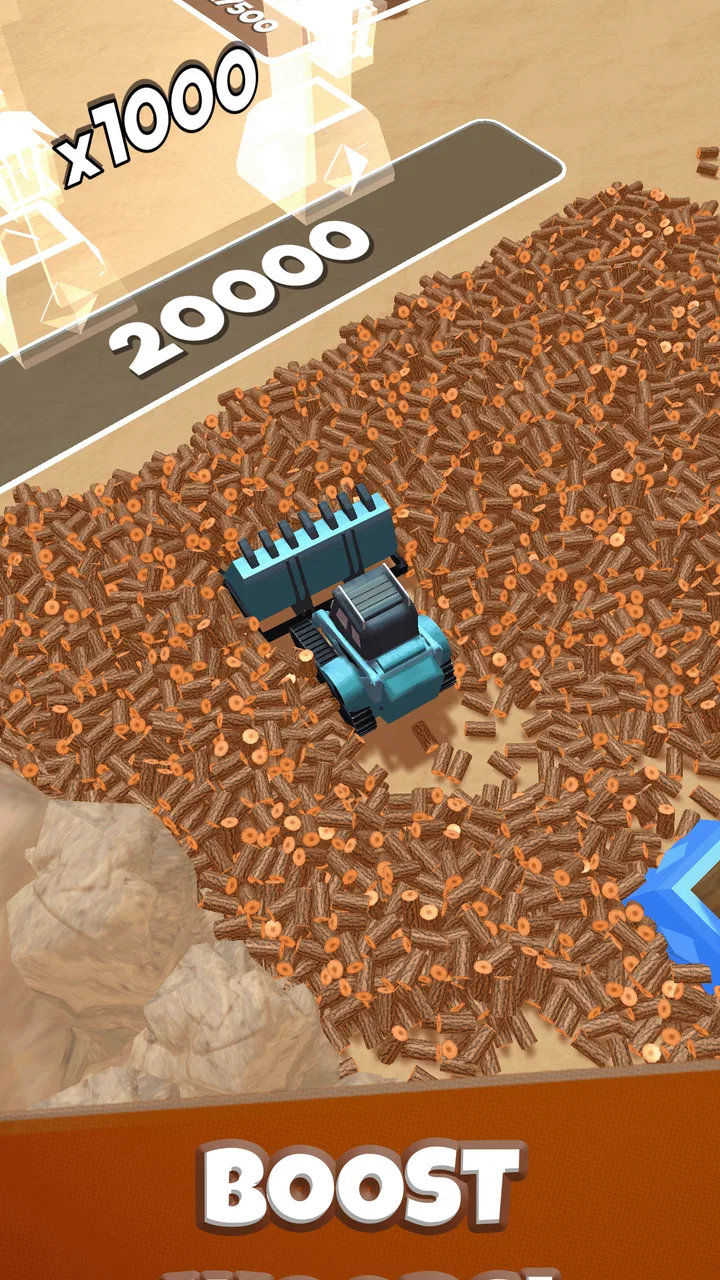
Idle Lumber Chopper Empire Inc
- 3.8
- Rating
- 10.00M
- Installs
- Free
- Price

 Analysis by App-foxy
Idle Lumber Chopper Empire Inc. is the kind of simulation game I can open for a few minutes, make a few decisions, and put down without feeling that I have abandoned a complicated campaign. Its central idea is straightforward: develop a logging operation, harvest wood, and turn that activity into a larger idle business. I reviewed it as a casual player who values clear progress and low-pressure sessions, while also paying close attention to how comfortably it works in different everyday situations.
The game is free to download and is aimed at Everyone, which makes its presentation broadly approachable. Supercent, Inc. developed it, and the title sits in the simulation category rather than trying to be a demanding strategy game. That distinction matters. I would recommend it to someone who enjoys watching a small operation grow through repeated upgrades, but I would not present it as a deep management simulator with endless economic complexity.
How the game feels to use in everyday play
I find the everyday rhythm easiest to enjoy when I treat each visit as a quick check on the logging business, not a session that needs to fill every spare minute. That leaves room to notice which improvement actually helps before moving on. The next section looks at how that simple routine shapes the choices I make and why a little patience can make the progress feel more rewarding.
You May Also Like

 Blood Strike: 2.5 Anniversary
Blood Strike’s Loadouts Turn Every Drop Into a Tactical Gamble
A close look at Blood Strike’s custom loadouts: how fast access to signature weapons reshapes its battle royale rhythm, rewards preparation, and narrows the gap between fights.

 Pandora - Music & Podcasts
Pandora’s Music Is Easy to Start, but Harder to Recover
Pandora’s strength is its low-effort path from a seed to a station. Its weak spot is how much confidence it asks you to place in connection, setup, and quiet recovery.

 8 Ball Pool
 Is Built on Rivalries, Rematches, and Routine
A close look at the rivalries, rematches, shared routines, and unanswered safety questions that turn a quick pool match into a persistent mobile community.

 Samsung Music
’s Quiet Strength Is Playing What You Already Own
Its reach comes less from spectacle than from dependable access to a personal library. That simplicity is both the app’s strongest retention engine and its ceiling.

 AccuWeather: Weather Radar
AccuWeather Review: A Quick, Clear Forecast for Everyday Decisions
For everyday plans, the best forecast is the one you can understand quickly. AccuWeather makes rain timing, radar, and local conditions easy to act on, with a few trade-offs.

 Hill Climb Racing
Why Hill Climb Racing Still Turns Crashes Into One More Run
A tiny car, a bumpy hill and one more upgrade: Hill Climb Racing keeps resurfacing because its simple chaos makes every near-miss feel personal.
More From Our News Desk



Readability and navigation make the first sessions easy
The strongest part of the experience is how quickly I understood the basic loop. The screen focuses on the logging business, its output, and the next improvement available to me. I did not need to study a long rulebook before making progress. That makes the game a comfortable choice for a short break, especially when I want something more interactive than a completely passive idle title.
The visual language is bright and uncomplicated. Important actions are presented as part of the business-management flow rather than hidden behind a maze of menus. In my experience, that reduces the mental effort needed to remember where an upgrade or collection action belongs. Players who are new to idle simulations should be able to recognize the purpose of the main controls without first learning a complicated interface.
That simplicity also creates a useful trade-off. Because the game keeps the management layer approachable, it does not offer the same sense of detailed planning I get from a traditional tycoon game with extensive spreadsheets, supply chains, or multiple markets. I can make meaningful choices about growth, but the experience is built more around momentum than precise forecasting.
The best way to play is to treat each short visit as a small management check-in. I look at what has accumulated, improve the part of the operation that is holding back progress, and leave once the next sensible step is clear. That habit works better than constantly reopening the game and tapping without a goal.
Progression is satisfying when I want low-pressure decisions
The appeal comes from seeing a modest logging operation become more productive over time. Idle games depend on that feeling of returning to a business that has continued working, and this one uses the lumber theme to give that progress a clear identity. The result is easy to understand: more effective harvesting should lead to a stronger empire.
I found the game most enjoyable when I focused on a single improvement target instead of trying to change everything at once. If production is slow, improving the part connected to output feels more rewarding than spending resources randomly. If the operation is earning steadily, saving for a larger improvement can create a better sense of purpose than immediately buying every small option.
This is one of the less obvious decisions in the game: the fastest visible upgrade is not always the most useful one. A player who spends every resource as soon as it appears may see frequent changes but weaker long-term momentum. I prefer to pause briefly, identify the bottleneck, and then invest. That approach makes the idle loop feel more like management and less like button pressing.
Motor and sensory considerations during play
For motor access, the game benefits from its simple, touch-focused structure. I do not need to perform rapid combinations or precise movements to enjoy the main progression. That makes it more suitable than action-heavy games for players who prefer slower interactions, have difficulty with sustained fast tapping, or simply want to play with one hand during a quiet moment.
It is also a practical fit for situations where attention comes and goes. I can check the operation, make a decision, and stop without losing the thread of a long mission. Someone waiting for an appointment or taking a short break between chores may appreciate that the game does not demand a full uninterrupted session to feel worthwhile.
Visual comfort is more dependent on the individual. The colorful presentation helps separate the game from a plain spreadsheet, but players who are sensitive to busy motion, bright screens, or repeated visual activity may prefer to lower their device brightness and play for shorter periods. I would not assume that a cheerful interface is automatically comfortable for every player.
Sound is not essential to understanding the basic management loop in my experience, so the game can fit quietly into a shared room or a commute where audio is inconvenient. That is useful for people who play in libraries, offices, waiting rooms, or beside someone who is sleeping. I still prefer headphones or muted play in public spaces, because idle games are often at their most convenient when they do not require the player to follow spoken instructions.
The age rating of Everyone supports the game’s broad audience, but that should not be confused with universal comfort. A younger player may understand the goal quickly, while an older player who dislikes animated interfaces may find the visual style less appealing. Accessibility is not only about whether someone can operate the controls; it is also about whether the presentation remains comfortable over repeated sessions.
Situational access: where this game fits best
I see three especially good use cases. The first is a short idle check during a break. I can open the game, collect progress, choose an upgrade, and close it without needing to remember a complicated storyline. The second is relaxed evening play, when I want a sense of advancement without the pressure of losing a competitive match. The third is intermittent play across the day, where returning to a growing operation provides a small reward each time.
A realistic example would be a player who has ten minutes before leaving for work. Instead of beginning a long level that needs concentration, they check the logging business, improve the slowest part of production, and leave the app running as a low-commitment background activity. Later, they return to see whether the decision produced better progress. That rhythm is where the game makes the most sense to me.
It is less suitable when I want a complete game in every session. If I am looking for direct control over a character, a story with carefully written scenes, or a competitive challenge that tests reflexes, this lumber simulation will feel limited. It is also not my first choice when I want a detailed economic sandbox. A more traditional tycoon game would usually offer more variables to balance, while this title keeps its focus on accessible incremental growth.
The game’s free entry point is helpful for trying the loop without paying first. However, in-app purchases range from $2.99 to $35.99 per item, so I would advise setting a personal spending limit before getting deeply invested in progression. Idle design can make waiting feel more noticeable after I become accustomed to faster development. I prefer to decide in advance whether I am comfortable progressing patiently or spending occasionally, rather than making that decision in the middle of a tempting upgrade path.
Small strategies that improve the experience
My first practical tip is to avoid confusing activity with progress. Tapping through every available action can feel productive, but the better question is which part of the lumber operation is currently restricting growth. I check the result of each improvement and give the system time to show whether the change actually helps. This makes the game calmer and gives each decision a clearer purpose.
My second tip is to use the idle nature of the game as a scheduling tool. I make a meaningful improvement before stepping away for a longer period, rather than spending everything and leaving the operation with no clear next objective. That way, the next return has a reason: I am checking whether the previous investment has created enough progress for the following step.
My third tip is to separate entertainment value from spending value. A purchase may make the next part of the loop feel quicker, but quicker is not automatically better if the enjoyment comes from gradual development. I would only consider an in-app purchase after deciding that I like the core routine without it. For me, the game works best when purchases remain optional rather than becoming the reason I continue playing.
A fourth useful approach is to play according to your energy level. When I am tired, I use the game as a simple check-in and avoid trying to optimize every detail. When I have more attention available, I compare the available improvements and think about which one addresses the largest delay. This flexibility is a genuine strength for players whose concentration varies throughout the day.
Remaining barriers and points of friction
The main barrier is repetition. The same harvesting-and-upgrading rhythm that makes the game easy to understand can eventually feel narrow. Players who need constant novelty may lose interest once the initial pleasure of building the operation becomes familiar. I would not choose this game for someone who quickly tires of incremental systems.
Another limitation is the modest depth of the management fantasy. The lumber theme gives the progression a recognizable setting, but players expecting a realistic forestry business may want more detail about workers, logistics, environmental decisions, equipment, or market conditions. I found the game more satisfying as a light empire-building loop than as a serious model of the logging industry.
The rating gives a useful signal about public reception: the game holds a 3.2 average from around 52 thousand ratings, with more than 10 million installs. I would read that combination as evidence of wide interest but mixed satisfaction. It is popular enough to attract a large audience, yet the average suggests that the idle format will not suit everyone. I would try it with modest expectations rather than assuming its broad reach guarantees a perfect fit.
There are also practical barriers that depend on the player’s context. Someone with limited mobile storage, a strict no-purchase rule, or little patience for waiting may prefer a premium game with a fixed price and a more complete structure. Someone who needs very large text, strong contrast, or extensive customization should test the interface on their own device before committing to long sessions. I can describe the game’s approachable layout, but comfort varies with screen size, eyesight, and personal sensitivity.
The current version is 54.6.0, and the game supports devices running Android 6.0 or later. That makes it relevant to people using older Android hardware, although actual comfort will still depend on the phone or tablet’s screen and general performance. I would check the operating-system requirement before downloading, especially if the device has not been updated in several years.
Who should play, and who should skip it?
I would recommend this game to players who enjoy watching numbers and production improve gradually, prefer relaxed touch interaction, and want a simulation that can be visited in short bursts. It is particularly suitable for someone who likes the idea of a tycoon game but does not want a dense interface or a long tutorial before the first decision.
It can also work for families looking for an Everyone-rated management game with a simple premise. I would still encourage younger players to understand that optional purchases are available, especially because the item range reaches $35.99. The most comfortable family experience is one where spending expectations are agreed before play.
I would suggest skipping it if your priority is realism, story, competitive skill, or constant hands-on control. A city builder, business simulator, or action game would be a better choice depending on that preference. I would also skip it if repeated waiting feels frustrating rather than rewarding. No upgrade strategy can change the fact that the game’s identity is built around gradual idle progress.
Inclusive verdict for different players and contexts
After spending time with it, I see Idle Lumber Chopper Empire Inc. as an approachable, low-pressure simulation with a clear purpose and a useful short-session structure. Its strongest inclusive quality is not a special accessibility claim; it is the way the core loop avoids demanding reflexes, precise movement, or uninterrupted attention. That makes it easier to fit around real life than many games in the broader simulation space.
Its weaknesses are equally important. The presentation may not suit every sensory preference, the management layer is lighter than a full tycoon simulation, and the repeated idle cycle can become predictable. Optional purchases also deserve deliberate handling. I would keep the game free to play first, decide whether the waiting rhythm is enjoyable, and only then consider whether spending adds anything worthwhile.
Supercent, Inc. has made a game that is easy to approach without pretending to offer limitless depth. I would recommend it to a friend who wants a casual lumber-business simulator for breaks, commutes, or relaxed evenings. I would describe it honestly as a gentle progression game rather than a demanding strategy experience. If that sounds like the kind of progress you enjoy, it is worth trying; if you need rich systems or constant action, another category will serve you better.
FAQs for Idle Lumber Chopper Empire Inc
01What is Idle Lumber Chopper Empire Inc. about?
Idle Lumber Chopper Empire Inc. is a simulation game where players manage a lumber empire. The goal is to chop wood, upgrade tools, and expand your business. Players can hire workers, automate tasks, and strategically invest in upgrades to maximize efficiency and profits. The game offers a relaxing yet engaging idle experience.
02Is Idle Lumber Chopper Empire Inc. free to play?
Yes, Idle Lumber Chopper Empire Inc. is free to download and play on both Android and iOS devices. However, it includes in-app purchases for players who wish to enhance their gameplay experience. These purchases can range from tool upgrades to special boosts, but they are entirely optional.
03Does Idle Lumber Chopper Empire Inc. require an internet connection?
Idle Lumber Chopper Empire Inc. can be played offline, allowing players to enjoy the game without a constant internet connection. However, some features, such as syncing progress across devices and accessing certain in-game events, may require an internet connection.
04What are the main features of Idle Lumber Chopper Empire Inc.?
Idle Lumber Chopper Empire Inc. features a variety of gameplay elements including resource management, worker automation, and strategic upgrades. Players can unlock new tools, discover different types of wood, and explore various environments. The game also offers achievements and challenges to keep players engaged and motivated.
05Are there any ads in Idle Lumber Chopper Empire Inc.?
Yes, Idle Lumber Chopper Empire Inc. contains ads, which help support the free-to-play model. Ads may appear as interstitials or offer in-game rewards for watching them. Players can choose to remove ads by making an in-app purchase if they prefer an uninterrupted gaming experience.
Pros
- Addictive gameplay with simple mechanics.
- Progression feels rewarding and satisfying.
- Visually appealing with vibrant graphics.
- Frequent updates add new features.
- Offline play available for convenience.
Cons
- Repetitive tasks can become tedious.
- In-app purchases can be costly.
- Ads can interrupt gameplay frequently.
- Limited customization options available.
- Requires constant internet connection for updates.

Idle Lumber Chopper Empire Inc
Gallery